UHMWPE polyethylene sheet is a common material. UHMWPE polyethylene sheet mechanical properties are higher than general high-density polyethylene sheets. Uhmwpe polyethylene sheet has good cold resistance and can be used at -269°C. UHMWPE density is 0.985g/cm3 and its molecular weight is 2-5 million. 2 million UHMWPE polyethylene SHEET product has a tensile strength at break of 40MPa and an elongation at break of 350%. Moreover, UHMWPE polyethylene sheet has good wear resistance, good low-temperature impact resistance, self-lubrication, non-toxic, water resistance, chemical resistance, and heat resistance better than general PE.
Advantages of UHMWPE Sheet
Extremely high abrasion resistance
The abrasion resistance of UHMWPE can be said to be the best of plastics. Its abrasion resistance is 4 times that of nylon 66 and PTFE (Polytetrafluoroethylene), and 6 times that of carbon steel.
High impact resistance
Among many plastic materials, the impact strength of UHMWPE is also one of the best. Its impact strength is 2 times that of PC and 5 times that of ABS.
Low temperature resistance
UHMWPE can still maintain good toughness and mechanical strength at liquid nitrogen temperature (-196℃) without cracking or deformation.
Good self-lubricating ability
The self-lubricating property of UHMWPE is almost the same as that of PTFE. Its friction coefficient is 0.07-0.11.
Corrosion resistance
UHMWPE has high chemical stability. At a certain temperature and concentration range, it can resist the corrosion of various corrosive media such as acid, alkali, salt and organic solvents.
Cracking resistance
UHMWPE can maintain a certain deformation without breaking when it is subjected to huge external and internal pressure, or bending stress.
Why Choose Us
Our Factory
Our has 100+ employees and 20+ engineers, covering an area of 30,000 square meters7 large-scale.
Our Products
Products include UHMWPE sheets, UHMWPE synthetic ice rink sheets, PE cutting boards, HDPE sheets, leg pads, ground protection pads, plastic belt conveyor rollers, PE accessories, etc.
Production Market
The products are also exported to Europe, America, Southeast Asia, Middle East, Africa and Taiwan, Hong Kong and other countries and.
Quality Assurance
We have strict Quality Control (QC) in order to make sure that all details of products meet customers' requirement.

GUHMWPE Sheet Has Excellent Physical and Chemical Properties
UHMW sheet is often used for lining chutes and hoppers to protect metal surfaces and to keep solid materials like sand, wood chips, or coal moving smoothly. Easy to fabricate, UHMW is also used for packaging, conveyor, and food processing machinery parts including star wheels, idler sprockets, and under-chain wear strips. UHMW offers very low moisture absorption and is a popular choice for marine construction applications like dock fender pads, pile guards, and anti-skid walkways. UHMW does not corrode, rot, or splinter like wood. Several grades of UHMW are available, including enhanced bearing and wear, and FDA compliant. Ultra high molecular weight polyethylene has a relatively high coefficient of thermal expansion. This may make it difficult to hold tight tolerances on UHMW parts that will be exposed to changing temperatures. There are many possibilities available when selecting the appropriate polymers for your special projects, which can make it challenging to make a decision. UHMW plastic could be the best option for you if you’re looking for a robust, lightweight, and long-lasting plastic.

What Is UHMWPE Sheet Used For?
In general, polyethylene plastic has a number of beneficial uses. When precautions must be taken as well, it is appropriate due to its strength and longevity. Let’s examine UHMWPE Material and how it may benefit you, spanning a range of commercial and industrial usage. However, there are a variety of applications where the components function at room temperature, e.g., automobile doors, seats, hand levers, etc., and UHMWPE can find a lot of use here. We are aware that UHMWPE is employed in the worn strip found within automobile doors. UHMWPE wear strips are often a good, affordable substitute for PTFE wear strips. Materials used in food service must be simple to sanitize while preventing the growth of mold and germs. Additionally, materials must be durable enough to withstand potentially harsh cleansers. UHMW is robust enough to withstand all kinds of cleansers and is rust-resistant. The best part is that it is available in a variety of finishes, making it simple to match a UHMW food shelf to existing decor. UHMWPE material is ideally suited for conveyor systems because of its capacity to tolerate high temperatures, frequent stress, and chemical exposure. This material is also perfect for making star wheels for conveyor systems, which hasten and effectively move goods through assembly and sorting processes.

The Performance and Application of UHMWPE Sheet Are Closely Related
UHMW is frequently used to make docks and dock fenders for a good cause. This material can survive moisture for a long time and is water-resistant. Additionally, it is resistant to abrasion. Thus there is almost little risk that it will sustain damage when boats crash into it when docking. UHMW is frequently used for boom trucks and outrigger pads. UHMWPE Material performs well in these high-stress applications due to its low friction coefficient and excellent impact strength. Outrigger pads can prevent cranes and boom trucks from slipping on unsteady construction sites. Furthermore, UHMWPE material performs well outdoors since it can withstand a broad range of temperatures. It might surprise you to hear that impact resistance makes UHMW plastic the perfect material for body armor. Additionally, it is flexible and lightweight, which makes it pleasant to wear and allows it to be twisted into the various sizes and forms required to shape armor properly. Ultra High Molecular Weight Polyethylene (UHMWPE) has steadily gained traction in modern manufacturing industries, thanks to its unparalleled properties that lend superior performance, longevity and customization potential. UHMWPE sheets in particular offer exceptional strength, abrasion resistance and chemical resistance, making them suitable for numerous applications from food processing equipment to heavy-duty machine parts. HMWPE, short for Ultra High Molecular Weight Polyethylene, is a thermoplastic polymer known for having extremely long chains of polyethylene oriented in the same direction. This alignment gives rise to exceptional tensile strength, rigidity and abrasion resistance properties. UHMWPE has a molecular weight numbering in the millions, hence the name. It also stands apart for being highly chemically inert and safe for food contact.

The Difference Between UHMWPE Sheet and HDPE Sheets
UHMWPE sheet and rod products are manufactured from the semi-crystalline polyethylene (PE) family. Sheets have a minimal molecular weight of 9 million which has a positive impact on material performance in an abrasive environment. UHMWPE has extremely low moisture absorption, chemically resistant and a very low co-efficient of friction. Other advantages include self-lubrication, a high level of resistant to abrasion, a high wear resistant, as well as being a very light and extremely tough material.HDPE (high-density polyethylene) and UHMWPE (ultra-high-molecular-weight polyethylene) are two types of polyethylene, a thermoplastic polymer that is widely used in many industrial and consumer applications. HDPE is a strong and durable material that is lightweight and easy to handle. This makes it ideal for a wide range of applications such as pipes, tanks, and containers. HDPE is resistant to many chemicals and is not affected by most acids and bases. This makes it ideal for use in chemical processing and storage applications.HDPE is relatively inexpensive compared to other plastics, making it a cost-effective choice for many applications. UHMWPE is one of the strongest and toughest plastics available, making it ideal for use in high-impact and high-wear applications. UHMWPE has a very low coefficient of friction, making it ideal for use in bearings, gears, and other mechanical components that need to move smoothly and easily. UHMWPE is highly resistant to most chemicals, including acids and bases, making it ideal for use in harsh chemical environments. The choice between them will depend on the specific requirements of the application and the trade-offs between cost, strength, chemical resistance and temperature resistance.

Similarities Between UHMWPE Sheet and HDPE
Both HDPE and UHMW are thermoplastic polymers made of ethylene monomers. Their raw materials are the reactive gases ethylene and hydrogen. These are polymerized in the presence of a catalyst, which differs based on the type of plastic manufactured: a Ziegler-Natta catalyst for HDPE or a metallocene catalyst for UHMW. UHMW and HDPE are thermoplastic polymers, meaning they melt into a molten liquid when heated and harden again when cooled. This quality makes them easily processed using injection molding, blow molding, and extrusion techniques. Their thermoplastic nature also means they can be recycled, remelted, and reformed into new products, unlike thermoset plastics which cannot be reprocessed after hardening. UHMW and HDPE look nearly identical to the untrained eye. They are opaque, white, or off-white plastics with a waxy surface texture. Because of their similar polyethylene chemistry, UHMW and HDPE share a comparable density and refractive index that provide the same milky, translucent appearance. Without material testing, UHMW and HDPE would be difficult to distinguish visually.

UHMWPE Sheet Are Particularly Popular
Overall, UHMW is an excellent general-purpose material. It offers performance properties that make it effective for use in a tremendous range of applications, from marine accessories to food storage. So companies that must comply with these regulations when choosing packaging materials or equipment supplies can feel confident in choosing UHMW sheets. Though versatility is one of the main selling points of this plastic, here are a few of the areas where it is especially popular. UHMW’s durability and ability to resist friction and corrosion also make it a popular choice within the industrial sector. More specifically, it is commonly used in the production of conveyance mechanisms and material handling equipment. These items need to be able to withstand products moving across them on a regular basis. So UHMW’s friction and abrasion resistance can be especially helpful in these facilities. UHMW plastic is also widely used in packaging solutions. Specifically, it’s beneficial in use cases where wear resistance and durability are crucial. If an item needs to be protected from corrosion, extreme temperatures, moisture, or friction, UHMW plastic should be a top choice.

Introduction to the Processing Technology of UHMWPE Sheet
For circular sawing, carbide-tipped blades give the best results. A 12-14” diameter blade should have approximately 24 teeth. Feed speeds can range from 10 to 40 feet per minute. For band sawing, a blade with three teeth per inch, raker set and positive rake angle are recommended. Feed speeds range from 10 to 40 feet per minute. Use high-speed steel tool bits with 10° front and side clearance and 15-30° rake. Lower cutting speeds of between 600 and 1,000 feet per minute are required. However, it is often necessary to run at a higher rpm to keep chips clear of the machine. Cutting fluids should not be necessary, but a blast of compressed air will sometimes aid in chip removal. When trying to achieve close tolerances or a very thin walled part in UHMW-PE, machine in passes. Remove most of the material on the first pass, then let the piece sit and rest overnight. Cutters designed for machining aluminum give the best results. Cutting speeds of 600 to 1,800 feet per minute are suggested, with a feed rate of approximately .01 inches per revolution. Router bits work well for slotting and light milling. Wood planers readily reduce the thickness and true-up the surface of UHMW-PE. A rigid machine with sharp blades will give very efficient stock removal and good surface finish. To minimize the potential to warp when machining UHMW-PE, plane half the desired thick-ness from each side of the sheet. Conventional high-speed drills are adequate for most drilling applications. For optimum performance, use special low helix drills with polished flutes. Drilling pilot holes prior to drilling a large hole is not recommended for UHMW-PE because its properties cause the drill to grab and pull itself into the material. Due to UHMW-PE’s abrasion resistant properties, grinding and sanding are usually ineffective. In fact, grinding may cause the material to melt and smear, resulting in a clogged grinding wheel. UHMW-PE modified with additives such as glass or metallic oxides will result in shorter tool life. Although carbide tools will add life to the tool, it requires higher speeds and feeds. Some materials with a very high percentage of abrasive additives are impractical to machining by any method.
Acrylic or Polymethyl Methacrylate (PMMA)
Well-known for its use in optical devices and products, acrylic is a transparent thermoplastic used as a lightweight, shatter-resistant alternative to glass. Acrylic is typically used in sheet form to create products such as acrylic mirrors and acrylic plexiglass. The transparent plastic can be made colored and fluorescent, abrasion-resistant, bullet-resistant, UV-tolerant, non-glare, anti-static, and more. In addition to being lighter than glass and polycarbonate sheeting, acrylic is seventeen times more impact-resistant than glass, easier to handle and process, and has endless applications.
Polycarbonate (PC)
Tough, stable, and transparent, polycarbonate is an excellent engineering plastic that is as clear as glass and two hundred and fifty times stronger. Thirty times stronger than acrylic, clear polycarbonate sheets are also easily worked, molded, and thermoformed or cold-formed. Although extremely strong and impact-resistant, polycarbonate plastic possesses inherent design flexibility. Unlike glass or acrylic, polycarbonate plastic sheets can be cut or cold-formed on site without pre-forming and fabrication. Polycarbonate plastic is used in a wide variety of products, including greenhouses, DVDs, sunglasses, police riot gear, and more.
Polyethylene (PE)
The most common plastic on earth, polyethylene can be manufactured in varying densities. Each different density of polyethylene gives the final plastic unique physical properties. As a result, polyethylene is used in a wide variety of products.
Polypropylene (PP)
This plastic material is a thermoplastic polymer and the world’s second-most widely produced synthetic plastic. Its widespread use and popularity are undoubted because polypropylene is one of the most flexible thermoplastics on the planet. Although PP is stronger than PE, it still retains flexibility and will not crack under repeated stress. Durable, flexible, heat-resistant, acid-resistant, and cheap, polypropylene sheets are used to make laboratory equipment, automotive parts, medical devices, and food containers, to name a few.
Polyethylene Terephthalate (PETE or PET)
The most common thermoplastic resin of the polyester family, PET is the fourth-most produced synthetic plastic. Polyethylene Terephthalate has excellent chemical resistance to organic materials and water and is easily recyclable. It is practically shatterproof and possesses an impressive high strength-to-weight ratio. This plastic material is used in fibers for clothing, containers for foods and liquids, glass fiber for engineering resins, carbon nanotubes, and many other products that we use daily.
Polyvinyl Chloride (PVC)
The third-most produced synthetic plastic polymer, PVC can be manufactured to possess rigid or flexible properties. It is well-known for its ability to blend with other materials. For example, expanded PVC sheets are a foamed polyvinyl chloride material that is ideal for products like kiosks, store displays, and exhibits. The rigid form of PVC is commonly used in construction materials, doors, windows, bottles, non-food packaging, and more. With the addition of plasticizers such as phthalates, the softer and more flexible form of PVC is used in plumbing products, electrical cable insulation, clothing, medical tubing, and other similar products.
Acrylonitrile-Butadiene-Styrene (ABS)
Created by polymerizing styrene and acrylonitrile in the presence of polybutadiene, ABS is robust, flexible, glossy, highly processable, and impact-resistant. It can be manufactured in a range of thicknesses from 200 microns to 5mm with a maximum width of 1600mm. With a relatively low manufacturing cost, ABS plastic sheeting is typically used in the automotive and refrigeration industries but is also found in products such as boxes, gauges, protective headgear, luggage, and children’s toys.
Our Factory
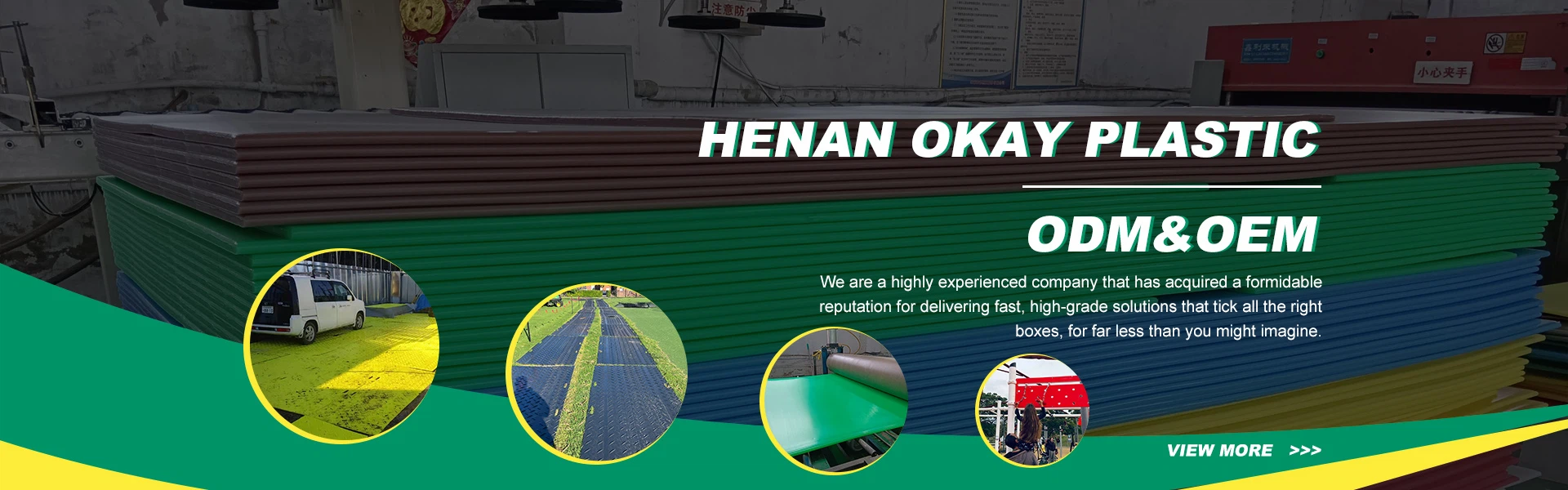
HENAN OKAY Plastic Industry Co., Ltd. Is located in the New Industrial Pioneering Park, Tengfei Avenue, Yigou Town, Tangyin County, Anyang City, Henan Province, with superior location, elegant environment and convenient transportation. We are a highly experienced company that has acquired a formidable reputation for delivering fast, high-grade solutions that tick all the right boxes, for far less than you might imagine. We know that cost is always a priority for our customers, which is why we do everything we can to keep prices low without compromising on the quality of plastic HDPE/ UHMWPE sheets or other accessories that you receive. In addition to offering a good selection of factory-made plastic sheets in a good selection of sizes, we also give our customers the opportunity to benefit from custom sizes and specifications if required.


Our Certificates

FAQ
Q: What is UHMWPE sheet?
Q: What are the common uses of UHMWPE sheet?
Q: What are the key properties of UHMWPE sheet?
Q: Can UHMWPE sheet be welded?
Q: Does UHMWPE sheet float in water?
Q: How does UHMWPE sheet compare to hdpe sheet?
Q: Can UHMWPE sheet be machined?
Q: How does UHMWPE sheet resist chemicals?
Q: What is the density of UHMWPE sheet?
Q: Can UHMWPE sheet be used in medical applications?
Q: What is the abrasion resistance of UHMWPE sheet?
Q: Can UHMWPE sheet be painted?
Q: What is the impact strength of UHMWPE sheet?
Q: How does UHMWPE sheet resist uv radiation?
Q: Can UHMWPE sheet be glued?
Q: What are the advantages of using UHMWPE sheet over metal?
Q: Is UHMWPE sheet fire retardant?
Q: How is UHMWPE sheet manufactured?
Q: What is the maximum load capacity for UHMWPE sheet?
Q: Can UHMWPE sheet be used in outdoor environments?
As one of the most professional UHMWPE sheet manufacturers in China, we're featured by quality products and competitive price. Please rest assured to wholesale UHMWPE sheet for sale here from our factory. Contact us for customized service.
Borated Polyethylene, Big Foot Outrigger Pads, thick uhmwpe sheet


