


In the realm of marine and outdoor applications, the durability and longevity of materials are of utmost importance. One material that has gained significant popularity in recent years is Marine Board HDPE. As a supplier of Marine Board HDPE, I often receive inquiries about its resistance to UV rays. In this blog post, I will delve into the science behind UV resistance in HDPE, explore the factors that affect it, and provide insights into how our Marine Board HDPE stands up to the harsh effects of sunlight.
Understanding UV Rays and Their Impact on Materials
Ultraviolet (UV) rays are a part of the electromagnetic spectrum with wavelengths shorter than visible light. They are classified into three types: UVA, UVB, and UVC. UVC rays are mostly absorbed by the Earth's atmosphere and do not reach the surface. However, UVA and UVB rays can penetrate the atmosphere and cause damage to various materials, including plastics.
When plastics are exposed to UV rays, a process called photodegradation occurs. This process involves the absorption of UV energy by the polymer chains in the plastic, which leads to the breaking of chemical bonds. As a result, the plastic can become brittle, lose its strength, and change color. These changes can significantly reduce the lifespan and performance of the material, especially in outdoor applications where it is constantly exposed to sunlight.
UV Resistance in HDPE
High-density polyethylene (HDPE) is a thermoplastic polymer made from ethylene monomers. It is known for its high strength-to-density ratio, chemical resistance, and impact resistance. However, like other plastics, HDPE is susceptible to UV degradation. The degree of UV resistance in HDPE depends on several factors, including the type of HDPE, the presence of additives, and the thickness of the material.
Type of HDPE
There are different grades of HDPE available, each with its own set of properties. Some grades are specifically formulated to have better UV resistance than others. For example, HDPE resins that are used in outdoor applications often contain additives that can absorb or reflect UV rays, protecting the polymer chains from damage.
Additives
Additives play a crucial role in enhancing the UV resistance of HDPE. There are two main types of additives used for this purpose: UV absorbers and UV stabilizers.
- UV Absorbers: These additives work by absorbing the UV energy and converting it into heat, which is then dissipated from the material. Common UV absorbers used in HDPE include benzotriazoles and benzophenones.
- UV Stabilizers: UV stabilizers, also known as hindered amine light stabilizers (HALS), work by scavenging the free radicals that are generated during the photodegradation process. By preventing the formation of free radicals, HALS can significantly slow down the rate of UV degradation in HDPE.
Thickness of the Material
The thickness of the HDPE material can also affect its UV resistance. Thicker materials generally have better UV resistance than thinner ones because they have more polymer chains to absorb the UV energy. Additionally, the outer layer of the material can act as a protective barrier, shielding the inner layers from UV rays.
Our Marine Board HDPE and UV Resistance
At our company, we understand the importance of UV resistance in marine and outdoor applications. That's why our Marine Board HDPE is specifically formulated to provide excellent UV resistance.
High-Quality Resin
We use high-quality HDPE resin that is designed for outdoor use. This resin contains a combination of UV absorbers and stabilizers that provide long-lasting protection against UV rays. The additives are carefully selected and formulated to ensure optimal performance in different environmental conditions.
Customizable Thickness
Our Marine Board HDPE is available in a range of thicknesses, allowing customers to choose the option that suits their needs. Thicker boards provide enhanced UV resistance and durability, making them ideal for applications where the material will be exposed to direct sunlight for extended periods.
Testing and quality documents
We subject our Marine Board HDPE to rigorous testing to ensure its UV resistance. Our products are tested in accordance with international standards to verify their performance in outdoor conditions. Additionally, we have received quality documents from independent testing laboratories, which attest to the quality and durability of our products.
Applications of Marine Board HDPE
Marine Board HDPE is a versatile material that can be used in a wide range of marine and outdoor applications. Some of the common applications include:
- Marine Construction: Our Marine Board HDPE is ideal for use in boat docks, piers, and other marine structures. Its high strength, chemical resistance, and UV resistance make it a reliable choice for these applications.
- Outdoor Furniture: The material can be used to make outdoor furniture such as benches, tables, and chairs. Its durability and resistance to weathering ensure that the furniture will last for many years.
- Signage: Marine Board HDPE is also suitable for outdoor signage. It can be easily cut, shaped, and printed on, making it a cost-effective and long-lasting option for advertising and information signs.
Welding HDPE Sheet
In addition to its UV resistance, our Marine Board HDPE can be easily welded using a process called Welding HDPE Sheet. Welding HDPE sheets together allows for the creation of larger and more complex structures, expanding the possibilities for its use in various applications.
The welding process involves heating the edges of the HDPE sheets to a molten state and then pressing them together. This creates a strong, seamless bond that is as strong as the original material. Welding HDPE sheets is a relatively simple process that can be done using specialized welding equipment.

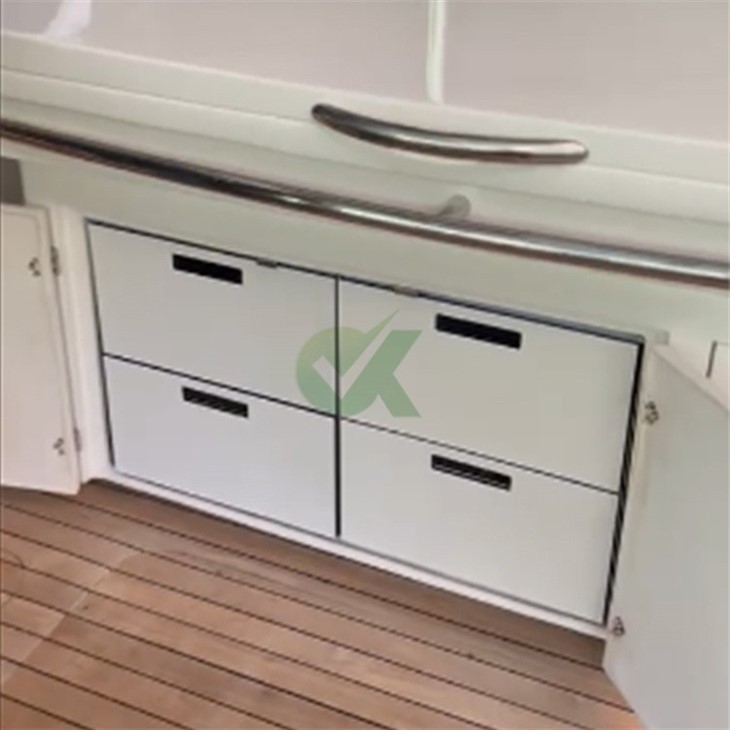
10mm High Density Polyethylene (HDPE) Boards
One of the popular options in our Marine Board HDPE range is the 10mm High Density Polyethylene (HDPE) Boards. These boards offer a good balance between strength and flexibility, making them suitable for a variety of applications.
The 10mm thickness provides excellent UV resistance and durability, while still allowing for easy handling and installation. Whether you need a material for a small DIY project or a large-scale commercial application, our 10mm HDPE boards are a reliable choice.
Contact Us for Procurement
If you are interested in our Marine Board HDPE or have any questions about its UV resistance or other properties, we would be happy to assist you. Our team of experts can provide you with detailed information, samples, and pricing.
We are committed to providing high-quality products and excellent customer service. Whether you are a contractor, a manufacturer, or a DIY enthusiast, we can help you find the right solution for your needs. Contact us today to start a conversation about your procurement requirements.
References
- ASTM International. (20XX). Standard Test Methods for Evaluating the Resistance of Plastics to Environmental Stress Cracking.
- Plastics Europe. (20XX). Polyethylene - Properties, Applications, Recycling.
- Wypych, G. (20XX). Handbook of Fillers, Second Edition.
Need help matching this material to your project?
Send your project size, thickness, working environment and expected quantity. OKAY Plastics can help review suitable material options, processing details and quote requirements for industrial use.
Related product pages for quotation review
- Marine board HDPE for outdoor board size, thickness, color, drawing, quantity and destination review
- HDPE board for outdoor panel cutting and installation comparison
- Custom industrial HDPE sheet for machining, fabrication and service environment reference
- Send marine board HDPE drawing, outdoor condition, destination and estimated quantity for quotation


